Eighteen months after NVIDIA announced Blackwell, B200-based clusters have moved from waiting lists into production halls. For teams budgeting their next large-language-model run, the arithmetic has changed in three fundamental ways.
1. Tokens per dollar, not FLOPS per chip
On paper, a B200 delivers roughly 2.2× the training throughput of an H100 at FP8, and the gap widens further with FP4 inference. But the metric that decides budgets is tokens per dollar of total cost of ownership — and there Blackwell’s gains compound. Higher per-GPU memory (192 GB HBM3e) means fewer pipeline-parallel stages, less inter-node traffic and better utilization of every node you own.
In our modelling for a 70B-parameter dense model, a 256-GPU B200 cluster completes the same token budget as a 512-GPU H100 cluster in a comparable wall-clock window — while drawing roughly 35% less facility power for the run.
2. The network is now half the design problem
NVLink 5 pushes 1.8 TB/s per GPU inside the rack, which moves the bottleneck squarely to the scale-out fabric. A cluster that pairs B200 nodes with a 400G leaf-spine built on last generation’s oversubscription ratios will leave measurable throughput on the table. We now specify 800G-ready spines and rail-optimized topologies for anything above 64 GPUs.
3. Power and cooling decide the schedule
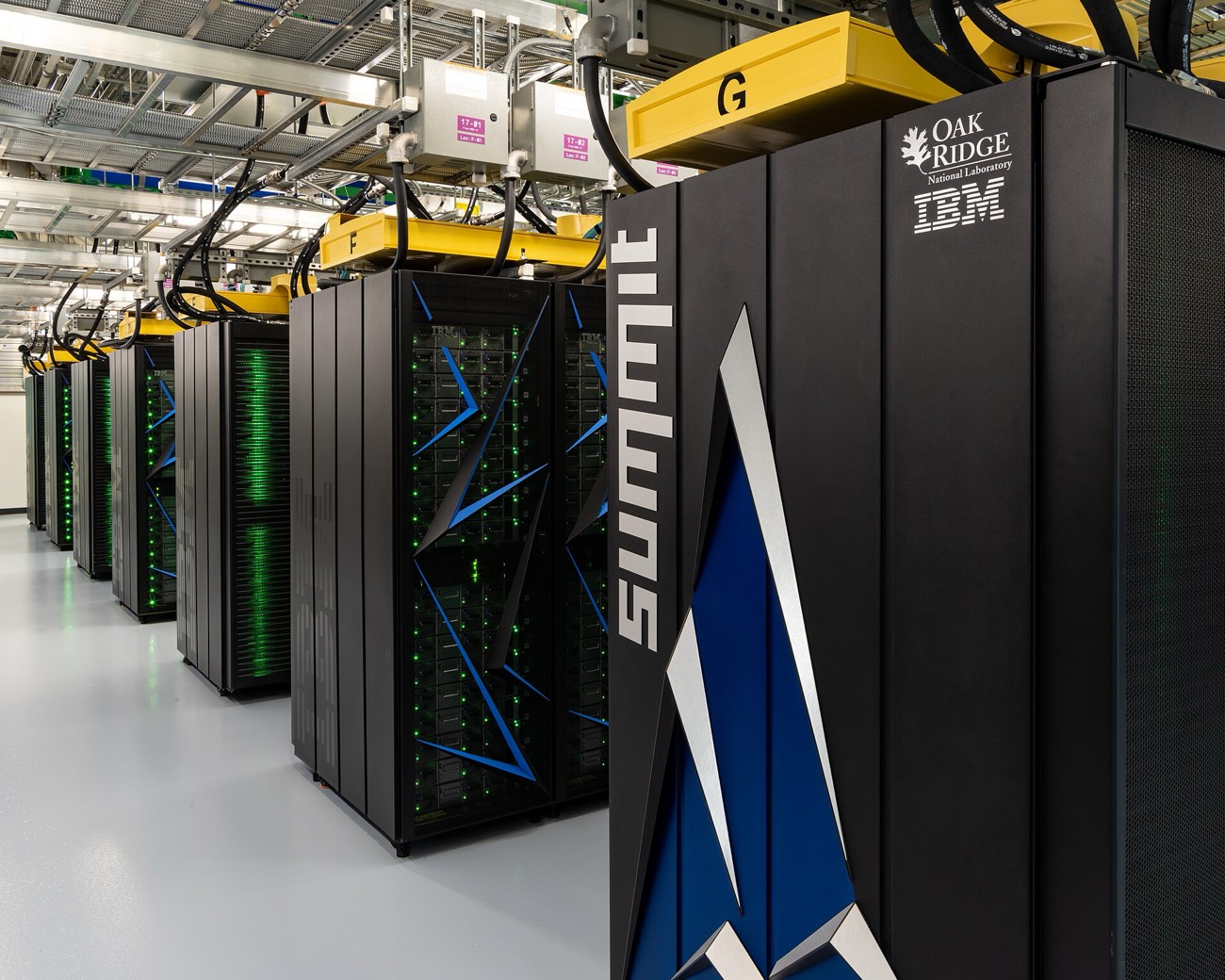
A fully populated B200 rack lands between 120 and 140 kW — beyond what most air-cooled halls can absorb. Direct liquid cooling is no longer optional at this density, and lead times for CDUs and manifolds are currently longer than for the GPUs themselves. Order the cooling loop first; the silicon will wait for it.
The fastest path to a production Blackwell cluster in 2026 is not the GPU allocation — it is the facility that can accept it.
What we recommend
- Size clusters around memory capacity per model shard, not raw GPU count.
- Specify 800G-capable spines now, even if day-one optics are 400G.
- Run a thermal audit before committing to rack counts — retrofits cost more than greenfield loops.
- Secure B200 allocation and CDU lead times in the same procurement window.
PEXON supplies B200 and HGX platforms from Supermicro, Dell and Lenovo with matched cooling and 400/800G fabrics — delivered as one validated bill of materials.